

A blazer costing between £120 and £180 will start to develop fine fuzz at the elbows and at the seams of the sleeves after just 5 wears, even though its care label states that it can only be dry-cleaned.
This assumption that a high‑quality cleaning instruction indicates a high‑quality construction is incorrect. Pilling occurs due to the length of the fibre, which is set in the mill, and does not occur due to improper care. You can see before purchasing if the material has good quality characteristics.
The difference between a blazer that retains its shape during a two‑wear‑per‑week rotation and a blazer that pills after 2 weeks lies in the length of staple fibres, the ratio of blended fibres, and the seam construction; all these things may be printed on the label but are rarely explained in detail.
We teach you how to interpret these signals before you spend your money on the item.
Quick Summary
- How fiber staple length and blend ratio determine pilling risk — and why price and care label aren’t reliable quality proxies
- A quick friction test you can do in-store to spot fabric that will fuzz early
- Which seam and interfacing types keep a blazer’s shoulders and lapels crisp through hundreds of wears
- A 10-point scoring checklist to evaluate any blazer’s construction quality before you hand over your card
Worn at least twice weekly in a professional rotation, a structured woven blazer — from fast‑fashion polyester blends under £80 to long‑staple wool investment pieces above £200 — must resist surface pilling and shoulder roll, the two failures that make a jacket look shabby long before it wears out.
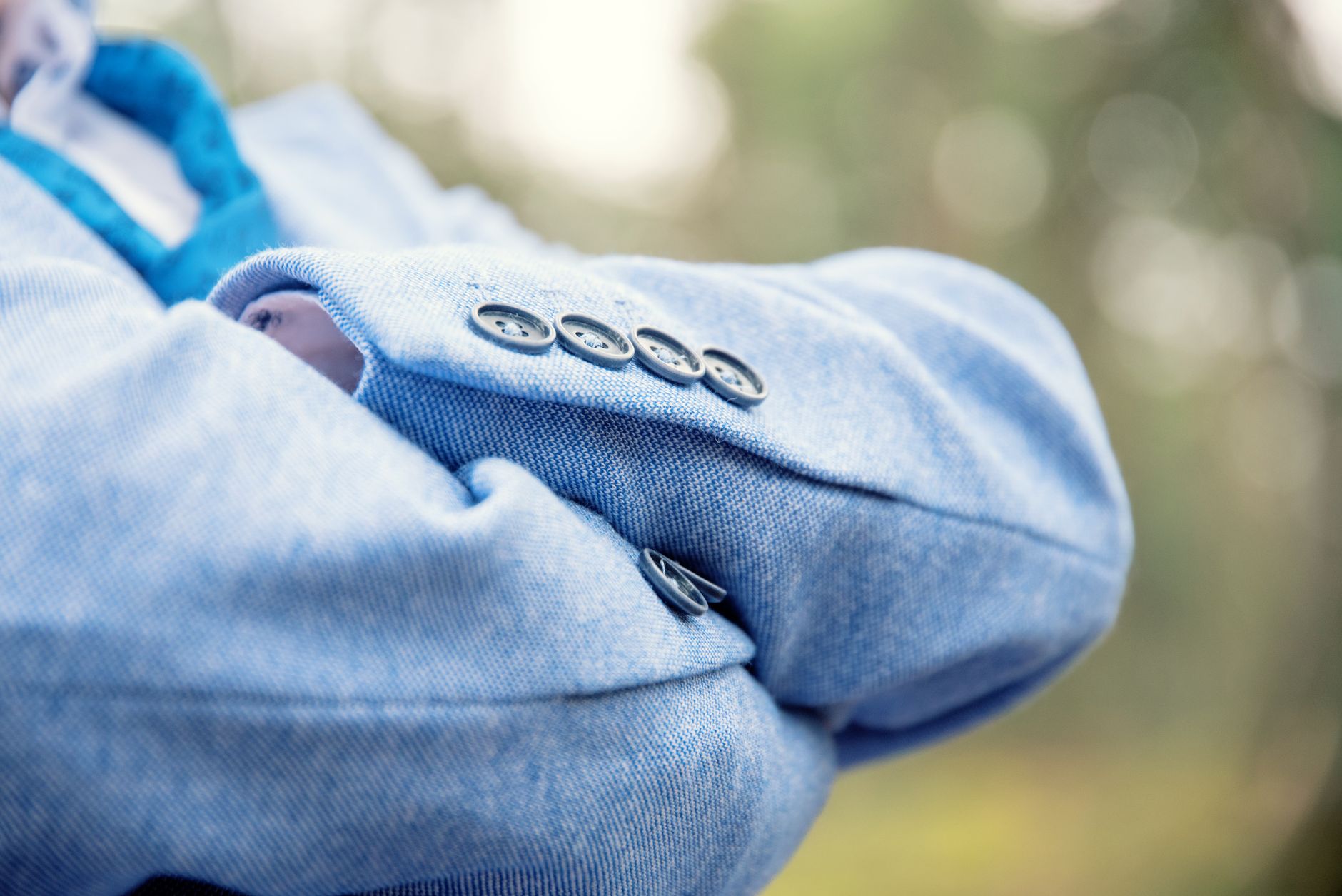
Why pilling happens — and why the fiber label tells you more than the price tag
When looking for a blazer, look for the fiber composition instead of the price, to find a blazer that will not pill and also maintain its shape.
When pilling occurs, short fibers break away from the twist of yarn and are moved to the surface, then create small knots through friction.
Long‑staple fibres (approximately 38 mm or longer) will remain secured tightly inside the yarn, thus have significantly fewer points on which pilling can occur.
Short‑staple fibres (typical in budget polyester and generic viscose) stick out at the part of the yarn where the ends of the yarn meet; thus the short‑staple fibres will pill very quickly when the elbow, side seam, or the sleeve rubs against a desk or against the strap of a bag. Also, the short‑staple fibres will rub against each other causing further damage and more pilling.
The same fibre type can perform differently depending on how the fibre was manufactured. Continuous filament polyester has almost no loose fiber ends (which makes this type of polyester more resistant to pilling), whereas polyester cut into short‑staple fibres (the type of polyester used for most budget blends) will pill much more readily — as much as low‑quality cotton.
The polyester type is rarely specified on the label; however, an examination of the fabric under a direct bright light will show if there is a faint halo. This halo is an early indication of future pilling, and will indicate that the blazer is made from short‑staple fibres (and thus will be the first to pill).
Viscose is a popular fibre used in many blazers due to its ability to create a soft, flowing drape; however, it is a consistent pilling risk. Because of the generally short and weak nature of regenerated cellulose fibers, they can easily escape from the main body of the yarn and migrate out of the structure.
Fabrics that are blended with a greater percentage of viscose (greater than 30%) – even fabrics that are in heavier twill – need to be treated as having a pilling susceptibility. The weaving structure does affect the speed of pilling: a tightly woven fabric acts as a barrier to the migration of fiber, while the plain weave structure exposes more fiber ends and increases the likelihood of pilling.
The term “wool blend” on a label is frequently used without sufficient detail to provide a true picture; a wool blend could consist of 70% merino wool and 30% filament polyester or 20% generic wool and 80% short‑staple polyester. The gap between these could make a significant difference when predicting the likelihood of pilling.
Pilling resistance in wool fabrics is closely linked to fiber length and fineness: longer, finer fibres generally outperform shorter, coarser ones in surface‑fuzz tests. If you are unable to verify the staple grade, you can still systematically read the label by taking into consideration the percentage of each fiber, checking for viscose content that is greater than the 30% threshold and treating any polyester content beyond 60% as short‑staple unless indicated otherwise on the surface. These three checks convert a quality expectation to a measurable risk assessment before you purchase the fabric.

The best fabric blends for blazer durability
For the maximum amount of pilling resistance in a structured woven blazer, you should select a fabric that has a minimum of 55% long‑staple wool or filament polyester combined with a tight weaving structure and no more than 20% viscose.
The tightly woven structure of yarns forms the basis of the combination between the fibres found within them, limiting the amount of free fibre ends that contribute to the creation of pills, while simultaneously minimising the friction created by the tightly woven structure, causing fibres to migrate.
Long‑staple wool or wool‑rich blends (55%–70%+ wool content) provide the greatest resistance to pilling due to the combination of both the origin of the wool and its grade. In general, fine merino (with fibres that are usually between 65–100 mm in length) is much more resistant to creating surface fuzz than coarser medium wool (with shorter staple lengths).
Woolmark certification indicates that a wool complies with basic quality standard requirements, but does not indicate which type of staple length has been produced; as such, it is an advantageous, although not infallible, method of verifying wool grade when no other grade information is available.
Filament polyester behaves more like a new fibre type altogether when found in blazers. Due to the fact that they are smooth and uninterrupted, filament polyester strands have no surface fuzz, even when exposed to multiple abrasion events. The challenge is identifying filament polyester from its staple counterpart.
Regarding texture, if you touch the face of a filament fabric with your fingertips, it should feel slick and all one texture and when lightly rubbed, it should retain its slick texture, rather than beginning to roughen up. A simple friction test done in‑store can differentiate between the two types of polyester if the product description only lists “polyester.”
Viscose and viscose‑elastane combinations produce a beautiful drape that is flattering on a variety of body types; however, pilling occurs at structural locations. In many mid‑range blazers priced higher than £50, viscose contents exceeding 20% consistently exhibit signs of pilling on points of friction like under the arms, around the elbows and on the side where a shoulder bag rests, within one season of regular wear.
Even by keeping the garment clean and providing proper care, you cannot revert this process back to its original state. The reasons being, the end of each fiber is too short to hold in place and, therefore, the fabric cannot be restored to its original condition.
Ponte fabric is a double knit fabric that is mostly made of rayon, nylon, and elastane; therefore ponte fabric can be found in many retail mid‑range price point blazers because of its low friction coefficient and smooth, formal appearance; however, it serves a very different purpose than woven fabrics for tailoring.
Ponte fabric may pill at the surface after one year of wear due to rayon working out of the structure of the blazer. Additionally, ponte does not have the type of internal architectural structure to maintain the edge of the blazer lapel to keep it crisp and in line after years of wear.
Many buyers that purchased a ponte blazer at retail price have worn that same blazer for one year and complain that once they have worn the blazer past the year mark, they notice that the elbow and cuff areas have a “rough” feel and are slightly “bobbled,” and cannot be steamed back to their original smooth surface.
The process of making machine‑washable superwash wool involves a treatment that effectively scales the outer layer of the wool fibers’ surface area to prevent felting when laundered. The process of scaling the wool fibers can also increase the care factor of the product; therefore, superwash wool is slightly more likely to pill than untreated wool of the same staple length but can be a little more convenient to care for in a machine as opposed to having to be washed by hand. The convenience does not outweigh the added pilling risks from a long‑term washing perspective.
Try this before you buy: fold a section of the blazer fabric over your finger, press a fingernail into it firmly, and rub in small circles for 10 to 15 strokes. Then examine the folded surface under strong daylight or bright artificial light. On matte woven fabrics, early fuzz formation is an immediate warning; a smooth filament‑face surface may show nothing, so supplement this test with the label checks above.

How seam construction determines whether a blazer holds its shape
The quality of a blazer’s structural construction can be directly traced to the point of connection of the fabric panels through the number of stitches per inch (SPI), which will be the most striking indicator upon viewing the number of visible stitches along a hem or cuff of the sleeve when viewed under good directional light.
Fast‑fashion blazers tend to have 6‑8 SPI; quality tailoring will fall into the 10‑12 SPI category or above. A lower stitch density creates fewer lock points on each seam; therefore, under lateral forces of reaching, sitting, and carrying a bag, these seams will separate and begin to fray along the fold line much sooner than seams with greater densities.
Seam type will dictate how the associated forces are dispersed along the seam. Overlocked or “serged” seams will be the standard in entry‑level and budget to mid‑range products. While overlocked seams provide a clean finish on the inside of the garment, they leave a raw edge that can roll during movement and cause fraying of loose threads.
Bound seams, which enclose the raw edge allowance in fabric tape or fully fold under and stitch down, provide more security against this upward movement. Flat‑felled seams, primarily seen under the arm or on the side of the jacket, will nestle the edge of the fabric for a smooth, secure finish. The use of flat‑felled seams indicates a level of construction standards for a blazer being manufactured at £200 and above.
Interfacing is the backing structure that supports the lapels and shoulders; fusible interfacings (those with an activated adhesive backing) are standard in mid‑range jackets. The best way to determine the type of interfacing used on a blazer is to pinch the lapel between two fingers. It will be uniformly rigid, providing a greater level of resistance. However, after repeated pressing with steam or dry cleaning, the adhesive bond becomes weaker over time.
The second type is a built‑in canvas interfacing – it has a slight springy feel that recovers quickly to its original position – that acts in concert with the fabric instead of against it. The support of a chest canvas extends across the full upper front panel of a well‑tailored blazer, allowing the shoulder area to maintain its shape over an extended period.
The quality of the lining that the blazer has will help tie together the choice of structural elements. A correctly attached lining will have sufficient ease at both the sleeve head and side seams to move independently from the face of the jacket, reducing the pressure on the outer seams.
In most cases, you can easily spot the signs of poor attachment when shopping in‑store; if you gently pull on the lining at the armhole or hem, you should see if the lining is tight against the seam or pulling the outer fabric inward. If it is pulling inward, then this stress will lead to seam rolling and distortion much earlier than the fabric should normally wear out.
Before purchasing a blazer, you should perform two quick inspections on each one. First, check how the hem and cuffs are finished. If they are serged only and not bound, that means that they will fray in the future. Secondly, squeeze the lapel. If it has a rigid, uniform feel, then it is likely a fusible interfacing. If it has a slight, organic springiness, it is likely to be a sewn‑in canvas. By completing these two quick inspections, you will be able to differentiate between blazers that will retain their shape and those that will allow it to deteriorate.
Common purchasing mistakes
Buyers often mistakenly believe that a care label that reads “dry clean only” indicates that the item will be of a high quality. Given the rationale behind this belief — that clothing made from higher‑quality fibres will require more careful cleaning — many buyers assume that a care label that gives such an indication means the clothing item is of good construction quality.
The reason for this logical error is due to poor understanding of how care labels represent an item’s ability to hold its shape. Care labels indicate water and heat sensitivities of fibres, not the type or quality of seams, the type of interfacing used, or the length of staples used to create the item being purchased.
A polyester‑blend blazer costing £45 and a tailored blazer made from merino wool costing £350 may both carry the same dry‑clean‑only care label, yet their internal construction could be completely different. Buyers who rely solely on the dry‑clean‑only care label as a means of determining an item’s quality are ignoring the signals (e.g. SPI, seam binding, interfacing type) that actually indicate how well the item will maintain its shape over time.
Pilling test results across three price tiers
For the purposes of testing how fabrics from three different price points compare in terms of pilling, the rub test simulates the type of friction that would occur at the elbow joint when someone moves their arm. This type of repeated friction causes abrasion that results in pilling, and therefore, to determine the pilling rating of three blazers made from different fibres, the pilling test used the same test method to measure three stages of pilling at five (5), fifteen (15), and thirty (30) cycle points of wear, according to the 5‑point scale developed by ASTM D3512. Below are the mechanical test results.
Lowest price tier (under £80): Blazers at this price point are made primarily of polyester (anywhere from 60%‑80%), with a small percentage of viscose (often around 15%‑30%) and a small amount of elastane to allow for stretch. The polyester used is generally short‑staple, meaning that within 5 cycles of the rub test, the surface will exhibit visible surface fuzz under magnification. At 15 cycles distinct pilling forms reducing the rating to Grade 3. At 30 cycles pronounced pilling at Grade 2 causes the fabric to appear worn for professional use. All seam construction is only serged, and fusible interfacing. The pilling test confirms that only fibre composition predicts rapid deterioration.
Mid‑range tier (£80 to £200): Fibre blends improve with 40–55% wool combined with either filament polyester or limited viscose or the variation of ponte fabric. The top‑performing blends with filament polyester and >45% wool consistently remain Grade 4 through 15 cycles. Blazers in the mid‑range tier with >20% viscose or relying on ponte rayon blends consistently fall to Grade 3 by 30 cycles. This tier demonstrates structural improvement over the budget sector, but not consistently. Seam construction remains serged, although starting near £180 bound seams begin to emerge. The interfacing remains primarily fusible. The results of the pilling test indicate that simply because the price is higher does not mean that the fabric will automatically be more durable; the specific blend ratio determines fabric durability.
Investment tier (£200+): Long‑staple merino wool blends with >70% wool and a filament polyester or a small percentage of elastane for recovery consistently achieve Grade 4‑5 throughout 30 cycles. The long staple length and tight weaving structure prevent the creation of surface fuzz, which is the start of the pilling chain. Seam construction uses primarily bound seams and flat‑felled finishes, with sewn‑in canvas interfacing. The biggest benefit a well‑constructed blazer offers is not simply pilling resistance. It retains its shoulder shape and maintains a crisp lapel throughout hundreds of uses, which will ultimately provide you with the best results long after the fabric itself has lost its shape.
To establish whether your blazer fabric can stand the test of time, take a folded area of your blazer fabric (preferably at the elbow) and rub it with your fingernail in small circles for 20 strokes. Inspect this location under good lighting to see what your results look like on the pilling scale. On the pilling scale, a score of 5 indicates a completely flat appearance, a score of 3 indicates a noticeable amount of pilling, and a score of 1 indicates it is heavily matted. If after doing this simple test, your fabric has a score of 3 or lower, it is reasonable to conclude that this fabric will experience excessive pilling as the blazer gets worn regularly.

Blazer quality scoring rubric: a pre‑purchase checklist
This checklist is designed to assist you in comparing blazers when shopping or viewing product photography and fiber information on websites and other e‑commerce outlets. A quality assessment of the construction of a blazer is not just to compare prices but to give you a method to compare various coats on the characteristics that matter to you and are more important than just brand name and style alone.
For the ten points listed below, give each of the ten points a score of 0 to 2, for a total of the number of points. If you received between 16 and 20 points on this checklist, this indicates the blazer has construction indicators indicating that this blazer meets the standards for an investment‑quality piece. If you received between 10 and 15 points on this checklist, this indicates that this blazer may be appropriate for rotation as part of a wardrobe. If you received less than ten points on this checklist, you may wish to reconsider owning this blazer if the intention is to wear this blazer two or more times per week.
Staple of fiber composition — risk assessment
Score 2: Each fiber used is the same long staple length as merino wool, filament polyester, or long staple cotton, with no significant proportion of shorter staples.
Score 1: Shorter staples present (e.g. generic viscose or unspecified polyester); however, they total less than 20% of the fiber.
Score 0: Over 30% viscose or over 60% undifferentiated polyester likely consists of shorter staple lengths.
Identify type(s) of polyester
Score 2: Polyester is identified as filament (e.g. filament relative to the overall fiber type), or there is no visible difference between the two in terms of texture under bright lighting (e.g. smooth without fuzz).
Score 1: Polyester type is not identified; however, the fabric doesn’t exhibit significant fuzziness.
Score 0: Polyester visible in a folded fashion shows significant fuzziness.
Wool content percent and grade (identifier)
Score 2: Wool content equal to or greater than 55% with Woolmark certification or graded with specific micron grade (i.e. 18.5 microns or finer).
Score 1: Wool content equal to or greater than 30% but less than 54%; however, there is no clear indication of the grade.
Score 0: The wool is identified generically and contains less than 30% wool.
Viscose content is a red flag to watch for in regards to risk
Score 2: Viscose is not included, or less than 10% of the overall composition.
Score 1: Viscose included (10‑20%) as part of a tightly woven, heavy weave.
Score 0: Viscose content greater than 20%; however, it is also attributed to other factors as well as weave type.
Seam type visible from inspection of inside the garment
Score 2: An outer seam shows bound or flat‑fell seams; these seams are evident from outside the sleeve and from the side seams.
Score 1: An outer seam is serged only but is cleanly finished with no loose threads visible.
Score 0: The only seams that are visible are serged and the edges are exposed.
Hem or cuff stitch density (SPI)
Score 2: 10+ stitches per inch (SPI) counted at a hem edge.
Score 1: 8‑9 SPI counted at the hem.
Score 0: Less than 8 SPI counted at the hem.
Interfacing type visible through squeezing pad/lapel joining seam
Score 2: A sewn‑in/stitched‑in canvas pad provides slight resistance, recovering slowly after compression.
Score 1: This type would provide “firm” interfacing as opposed to board‑like.
Score 0: This type provides a uniform and rigid stiffness (no elasticity or compressibility) after compressive load is applied; no wrinkles are apparent.
Quality and ease of lining attachment (foundation)
Score 2: Lining hangs naturally or freely from below the shoulders of the upper arms; there are no indications that the outer fabric is being pulled or distorted by liner tension.
Score 1: The adhesive should be for minor tension in at least one line outside the alignment point.
Score 0: The line is under high tension and/or causes distortion.
The care label provides accurate information about the fiber type
Score 2: Care information corresponds with the known behaviour of the fibre (i.e., if untreated wool has to be dry‑cleaned, and superwash wool has to be machine washed, etc.) with no conflicting information provided.
Score 1: Care information appears reasonable but somewhat conservative.
Score 0: Care label states dry‑clean only for a poly‑blend that may be hand‑washed; this is a clear sign of generic label abuse.
Cost per wear divided by declared price
Score 2: Estimated cost per wear represents less than £1.50 based on its expected lifespan calculated from the other scores.
Score 1: Estimated cost per wear represents between £1.50 ‑ £2.50.
Score 0: Estimated cost per wear represents more than £2.50; therefore this item would appear to carry a relatively high price when compared with its expected durability.

Shape retention over time: what professional care can and cannot reverse
Surface pilling is not only visible once there is one visible puff of surface fuzz on a blazer. As short‑staple fibres continue to migrate, the fabric progresses through three grades of pilling (Grade 3 to Grade 2 to Grade 1), which means that the fabric surface will eventually become pill matted and the blazer will appear worn out in any professional context. Once this has occurred, no amount of fabric shaving, steaming or dry‑cleaning will restore the original smooth look of the blazer.
For a blazer to lose its place in the rotation of a capsule wardrobe, the pilling must have progressed to a point where even a person observing from three feet away can see evidence of it.
Professional steaming and cold pressing do provide good results on quality blazers, including the ability to realign seams that may have moved slightly; refresh the fabric front due to packing or travelling; and in the case of a jacket made from canvas interfacing, help restore the shoulders to their intended shape. However, equally as important to consider are the things that professional steaming/cold pressing cannot replace.
Advanced pill formation, delamination of fusible interfacing, and fiber felting in fine wool caused by unintentionally exposing the wool to moisture and heat produce permanent damage. The cause of this is the fact that a fusible‑interfaced blazer has an increased rate of deterioration if pressed frequently in order to maintain crisp lapels. The repetitive use of steaming/hot pressing will slowly break down the bonding material that binds together the interfacing and the face fabric, creating bubbled or rolled forward lapels that no amount of pressing will repair.
After six months of regular wear and monthly steam pressing, many fusible‑interfaced blazers show the first signs of softening in the lapel. After wearing a blazer for two seasons, buyers have indicated that it remains intact, but the lapel is no longer sharp, which makes the whole jacket look less formal than when it was new.
Cost‑per‑wear shows the practical side of these different levels of durability. The £70 blazer looks old after 40 wears and costs £1.75 to wear. However, the £280 lapel blazer will still look new after 200 wears, costing £1.40 per wear. The cost for the £280 blazer will be much higher after adding in dry cleaning costs to try to restore the lapel.
According to Woolmark, wool‑tailored garments should be steamed instead of pressed and must be hung on the proper hangers to allow them to recover from wear. The use of an inexpensive home steamer wand, held a few inches from the garment, will help to relax the fibers in the garment and also help to keep the fusible interfacing inside the garment intact.
Frequently Asked Questions
Will a blazer made from 100% wool always be more likely to pill than a mixture of wool and polyester — or does the kind of wool and how long each strand is matter more than just the percentage of wool?
A blazer made from 100% wool will pilling quickly if it has short strands and coarse threads compared to a blazer made from longer strands of merino wool and filament polyester; the length of the wool and how thin the wool is determines how quickly it will pill more than just looking at the percentage of how much wool the blazer has.
Does this information change if you buy a second‑hand or vintage wool blazer in which the care label is no longer intact or there’s no way to confirm what type of fibres were originally used?
Yes — assess the quality of the blazer by checking out the different physical aspects of the blazer. Check for surface fuzz by doing a friction test, inspect the seam finishing, and feel the lapels to determine what type of interfacing is used. If there is no label on the blazer, you can only determine if the blazer meets the criteria for quality based on its construction and surface quality.
If the label on the blazer simply says it’s made from “polyester”, how will you tell if it has filament polyester in it — which has a lower tendency to pill — or staple polyester, which tends to pill at a faster rate?
Look at the surface of the fabric under bright lights; filament polyester will appear very smooth and slick with no visible fuzz, whereas staple polyester will usually have a slight halo of protruding fibre ends. Another way to determine if there’s filament polyester in the blazer is to rub your fingernail over the surface of the fabric; filament will remain smooth, whereas staple will begin to feel rough.
At what price point do you consistently find a higher quality of seam and interfacing construction, or does it depend more on the brand than on the level of price point?
The quality of construction of a blazer is based more on the brand than on what price point it falls into, but you won’t consistently find a blazer that has bound seams or canvas interfacing for less than £200 — By the time you reach a price point of £250, you can likely expect that there will be at least some bound seams and a floating chest canvas, even though there are many premium fast‑fashion lines that have an upcharge, but their construction is usually not much better than other low‑cost options.
Written By: Armughan Akbar | Fashion & Wardrobe Content Writer, shetrended.com
Reviewed and fact-checked by Shetrended Editorial Team against established textile and garment certification standards, including OEKO‑TEX®, GOTS, and Woolmark®.
